Retinyl, Retinol, Retinaldehyde, Retinoic Acid: What’s the Difference?
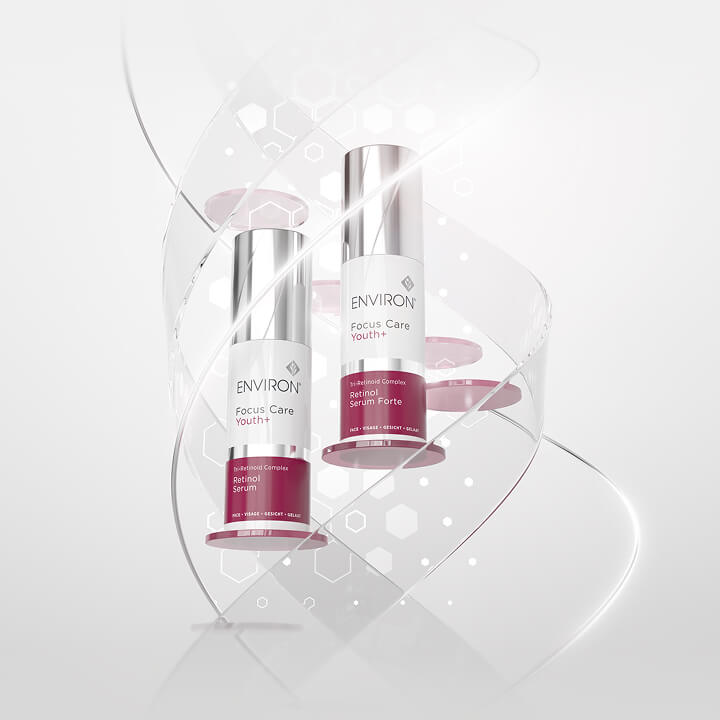
How Vitamin A Works in the Skin
Vitamin A is not a single compound, it works through a multi-step pathway:
Retinyl Esters → Retinol → Retinaldehyde → Retinoic Acid
-
Retinyl esters are gentle, slowly converting into active retinol to minimize irritation.
-
Retinol is the active form that provides measurable improvements in skin texture and tone.
-
Retinoic acid is the final stage, stimulating collagen synthesis and cellular renewal.
Many single-retinoid products skip these intermediate steps, delivering a strong dose all at once. This can lead to inconsistent results and increased risk of irritation.
Environ takes the #1 spot because it goes beyond 1% performance. Instead of relying solely on high-dose retinol, this formula uses a multi-pathway strategy that amplifies potency while keeping irritation in check:
- High-concentration retinoid blend supplies a strong foundation for visible results.
- Revinage™, a plant-derived “retinomimetic,” binds to retinoid receptors and mimics retinol’s regenerative effects, boosting collagen, smoothing texture, and calming inflammation without being a Vitamin A derivative.
- NovoRetin™, an advanced botanical active, protects retinoic acid (the active form of Vitamin A) from breaking down too quickly, meaning it stays active longer and works harder in the skin.
Together, these innovations form a three-pronged system:
- Delivering a concentrated retinoid dose.
- Mimicking retinoid activity through a non-irritating parallel pathway.
- Extending and amplifying retinoic acid activity in the skin.
This makes Environ’s Retinol Forte not just potent but smarter and stronger than traditional 1% formulas. It’s designed for experienced retinol users who want maximum rejuvenation with results that last.
The Retinoid Relay: A Staggered Release System
Environ’s Triple-Action Vitamin A Complex follows a “retinoid relay” approach, supporting the skin’s natural conversion pathway rather than overwhelming it:
Stage 1: Retinyl Palmitate & Retinyl Propionate
- Gentle esters act as a reservoir, slowly releasing retinol over time.
- Supports consistent, long-term use with minimal irritation.
Stage 2: Pure Retinol
- Delivers immediate, effective results.
- Improves skin texture, smooths fine lines, and enhances radiance.
This staggered system avoids the spikes in activity seen with traditional retinol products. By maintaining a sustained level of retinoic acid, it allows safe, year-round use, from dry winter months to humid summers (always paired with SPF).
The Step-Up Approach: Gradual Adaptation to Vitamin A
One of the reasons retinol can be irritating is that skin may not be accustomed to daily Vitamin A use. Environ’s Vitamin A Step-Up System addresses this by gradually increasing retinol concentration over time.
- Stage 1: Low-Level Esters – Introduces vitamin A gently to build tolerance.
- Stage 2: Moderate Retinol – Supports visible improvements while minimizing irritation.
- Stage 3: Retinol Forte – For experienced users, delivering maximum, clinically supported results.
This incremental approach ensures the skin adapts at a cellular level, reducing the likelihood of redness, dryness, or peeling. Over time, this system allows users to benefit from stronger concentrations of retinol without discomfort, making it suitable for long-term skin health and anti-aging results.
Clinical Evidence: Retinol Serum Forte
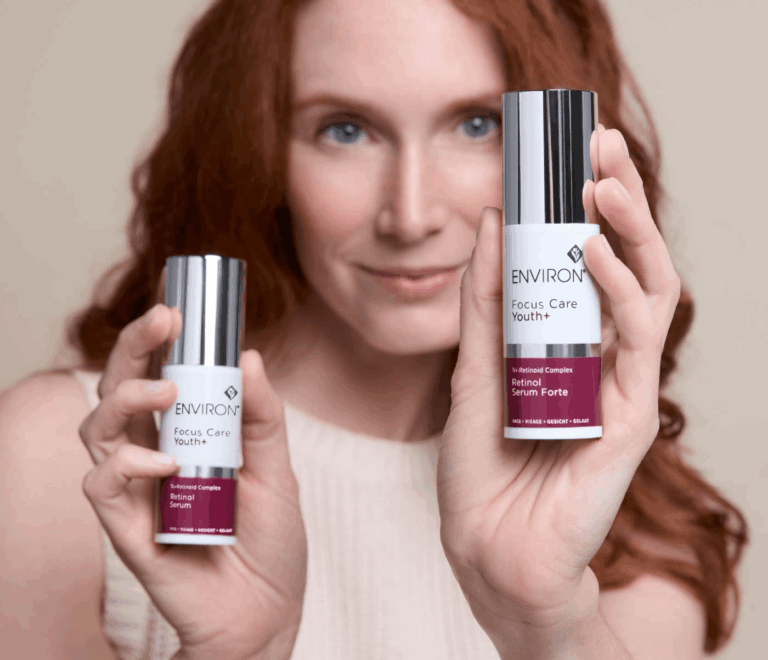
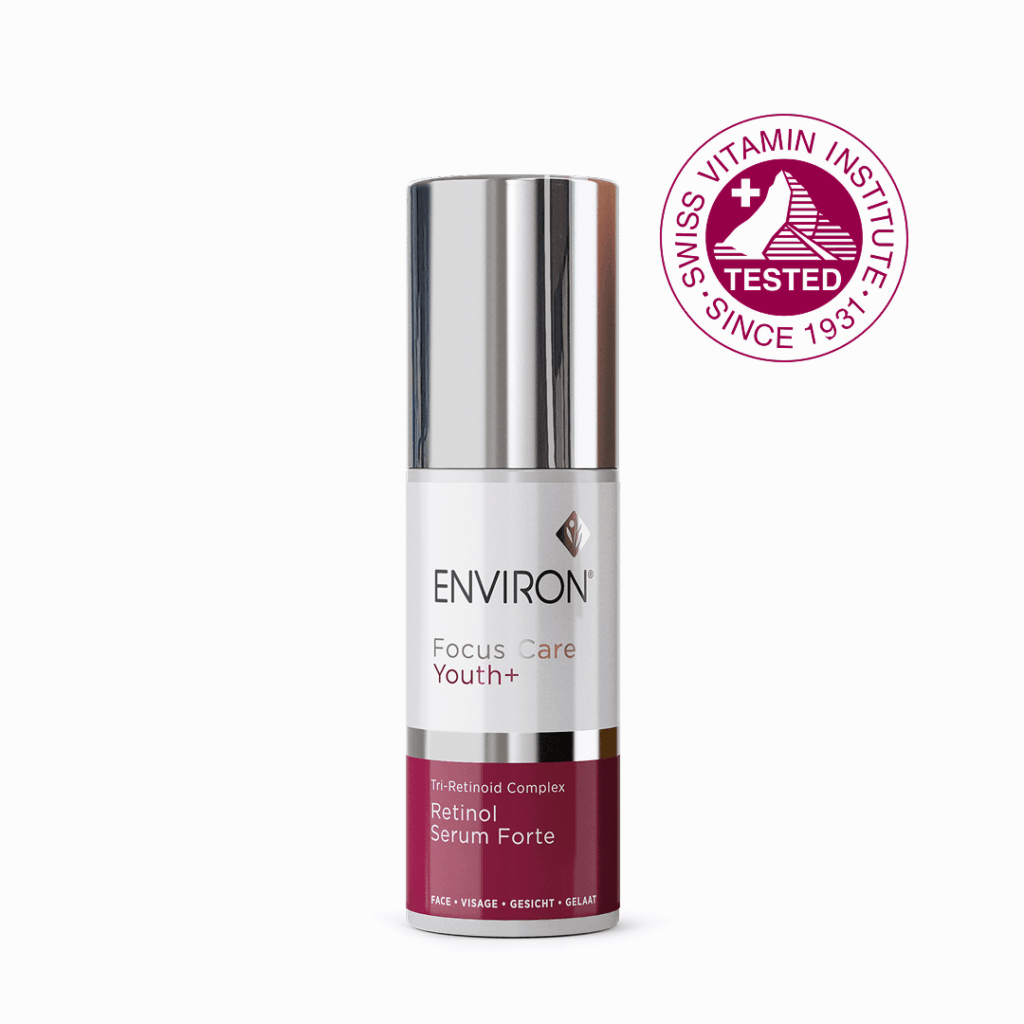
Tri-Retinol Complex Retinol Serum Forte
Environ’s Retinol Serum Forte was clinically trialed by an independent international laboratory on 22 volunteers over eight weeks. Volunteers’ skin was pre-adapted to daily vitamin A use to prevent retinoid reactions.
The study demonstrated:
- Statistically significant reductions in surface roughness
- Improvements in skin elasticity, recovery, and firmness
- Enhanced hydration, promoting smoother, healthier-looking skin
These results confirm that the formula delivers measurable anti-aging, smoothing, and moisturizing benefits in real-world use.
Environ offers a tailored approach to vitamin A skincare:
- Retinol Serum – Ideal for beginners, providing gentle, steady vitamin A benefits while minimizing irritation.
- Retinol Serum Forte – Designed for experienced users seeking stronger, clinically backed improvements in skin texture, fine lines, and firmness.
With this multi-stage approach and the step-up system, users are not just applying vitamin A—they are following a science-backed, gradual system that maximizes results while supporting long-term skin health.
References
- Kafi, R., Kwak, H. S., Schumacher, W. E., Cho, S., Hanft, V. N., Hamilton, T. A., … & Voorhees, J. J. (2007). Improvement of naturally aged skin with vitamin A (retinol). Archives of Dermatology, 143(5), 606–612. https://doi.org/10.1001/archderm.143.5.606
- Mukherjee, S., Date, A., Patravale, V., Korting, H. C., Roeder, A., & Weindl, G. (2006). Retinoids in the treatment of skin aging: An overview of clinical efficacy and safety. Clinical Interventions in Aging, 1(4), 327–348. https://doi.org/10.2147/ciia.2006.1.4.327
- Environ Skincare. (n.d.). Vitamin A Step-Up System & Retinol Serums. Retrieved September 2025, from https://www.environ.ca
- Zasada, M., Budzisz, E., & Rok, J. (2019). Retinoids: Active molecules influencing skin structure formation in aesthetic dermatology. Advances in Dermatology and Allergology, 36(6), 706–712. https://doi.org/10.5114/ada.2019.90299
- Kang, S., Fisher, G. J., Voorhees, J. J. (2001). Photoaging and retinoid therapy: An overview of mechanisms and clinical use. Dermatologic Clinics, 19(3), 431–445. https://doi.org/10.1016/s0733-8635(05)70196-2
- Environ Skincare. (2024). Retinol Serum Forte Clinical Trial Summary. Internal Laboratory Report.